
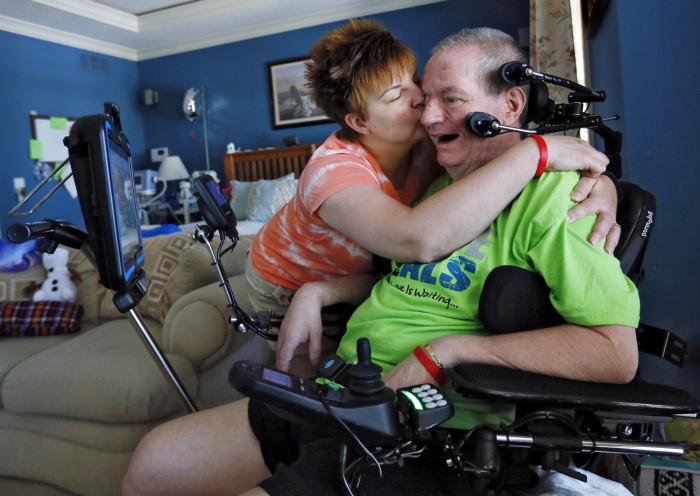
 ALS (Amyotrophic Lateral Sclerosis) also known as “Lou Gehrig’s Disease” is a neuromuscular disease which begins as muscle weakness and then slowly progress into total and complete paralysis throughout the entire body.
ALS patients utilize nursing and terapies to help in several ways:
- Preventing muscle loss and weakness
- Improving mobility and use of mobility devices
- Pain management
- Preventing pressure sores
- Maintaining speech communication skills
Due to the progressive nature of the disease that results in increasing muscle weakness, physical therapy should be implemented as soon as possible to assist the client in maintaining independence in their home. The therapist will perform a home safety assessment of your home environment and provide recommendations including home modifications to minimize or eliminate any hazards in your home.
Skilled Nursing will instruct on medications and pain management strategies. Skin breakdown is another area of concern for someone with ALS. Skilled Nursing will treat pressure sores (wounds) and assess the skin for other pressure areas and provide strategies to prevent skin breakdown. Some of the interventions used are instruction of breathing exercises and the use of incentive spirometer to increase lung expansion and ease shortness of breath. As the diseases progresses medical devices may be used to aid breathing.
Nursing will instruct on sources of dietary fiber and other strategies to prevent constipation
Speech therapy will help maintain your communication. The Speech therapist provides training on strategies that will assist you with communicating your needs to your family and significant others.
If speech is lost and you have no use of upper extremities, speech therapy will explore and recommend alternative methods of communication. Speech therapy will train on use of devices used for speech. Speech therapy will assess and monitor chewing, gag, cough and swallowing reflexes.
About ALS or Lou Gehrig’s Disease
Individuals with ALS produce an excessive amount of a neurotransmitter called glutamate that clogs the synapse nerve cells preventing the transmission of neural impulses. This clogging of the synapses causes death of these nerve cells resulting in muscle atrophy (shrinking) specifically to nerve cells in the brain and spinal cord that control voluntary movement. The motor nerves that are attached to muscles gradually degenerate and die from lack of receiving nerve impulses and as a result of this nerve death, the muscles atrophy and waste away.
Symptoms of ALS may include:
- Tripping
- Stumbling and falling
- Loss of muscle control and strength in hands and arms
- Difficulty speaking
- Swallowing and/or breathing
- Chronic fatigue,
- Muscle twitching and/or cramping
- Drooling
The most common path of the disease is to weaken either the arms or legs. ALS is not generally painful but some of the effects may be such as pressure sores, muscle cramps, joint contractions, constipation, burning eyes, swelling feet and muscle aches.
Article Source: http://www.ahhrehab.com/Lou-Gehrigs-Disease