
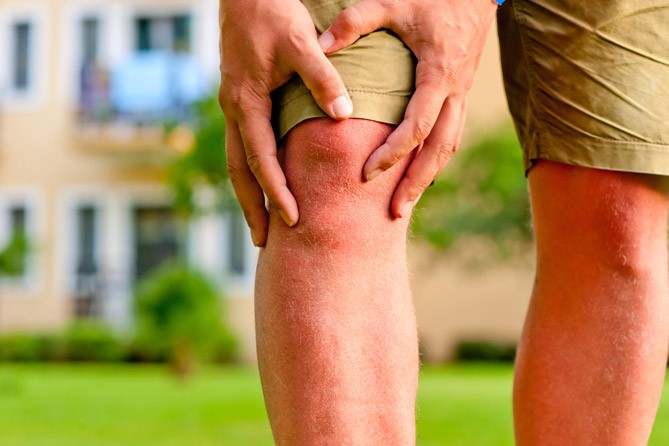

Arthritis is one of the most common diseases in this country. Millions of adults and half of all people age 65 and older are troubled by this disease. Most older people often have osteoarthritis, rheumatoid arthritis, or gout.
OSTEOARTHRITIS
Osteoarthritis (OA) is the most common type of arthritis in older people. OA starts when cartilage begins to become ragged and wears away. Cartilage is the tissue that pads bones in a joint. At OA’s worst, all of the cartilage in a joint wears away, leaving bones that rub against each other. You are most likely to have OA in your hands, neck, lower back, or the large weight-bearing joints of your body, such as knees and hips.
OA symptoms can range from stiffness and mild pain that comes and goes with activities like walking, bending, or stooping to severe joint pain that keeps on even when you rest or try to sleep. Sometimes OA causes your joints to feel stiff when you haven’t moved them in a while, like after riding in the car. But the stiffness goes away when you move the joint.
What causes OA? Growth older is what most often puts you at jeopardy for OA. Other than that, scientist think the cause depends on which part of the body is involved. For example, OA in the script or hips may running in families. OA in the knees can be linked with being adiposis.
RHEUMATOID ARTHRITIS
Rheumatoid Arthritis (RA) is an autoimmune disease. In RA, that means your body attacks the lining of a joint just as it would if it were trying to protect you from injury or disease. For example, if you had a splinter in your finger, the finger would become inflamed-painful, red, and swollen. RA leads to inflammationin your joints. This inflammation causes pain, swelling, and stiffness that lasts for hours. This can often happen in many different joints at the same time. You might not even be able to move the joint.
Gout is one of the most painful forms of arthritis Gout attacks often follow eating foods like shellfish, liver, dried beans, peas, anchovies, or gravy. Using alcohol, being overweight, and certain medications may also make gout worse. In older people, some blood pressure medicines can also increase your chance of a gout attack.
Gout is most often a problem in the big toe, but it can affect other joints, including your ankle, elbow, knee, wrist, hand, or other toes. Swelling may cause the skin to pull tightly around the joint and make the area red or purple and very tender. Your doctor might suggest blood tests and x-rays. He or she might also take a sample of fluid from your joint while you are having an attack.
ARTHRITIS SYMPTOMS
Common symptoms include:
- Lasting joint pain
- Joint swelling
- Joint stiffness
- Tenderness or pain when touching a joint
- Problems using or moving a joint normally
- Warmth and redness in a joint
If any of these symptoms lasts longer than two weeks, see your regular doctor or a rheumatologist. If you have a fever, feel physically ill, suddenly have a swollen joint, or have problems using your joint, see your doctor sooner.
ARTHRITIS TREATMENT
Each kind of arthritis is handled a little differently, but there are some common treatment choices. Rest, exercise, eating a healthy, well-balanced diet, and learning the right way to use and protect your joints are key to living with any kind of arthritis. The right shoes and a cane can help with pain in the feet, knees, and hips when walking.
- Osteoarthritis
Medicines can help you control OA pain. Rest and exercise will make it easier for you to move your joints. Keeping your weight down is a good idea. If pain from OA in your knee is very bad, your doctor might give you shots in the joint. This can help you to move your knee and get about without pain. Some people have surgery to repair or replace damaged joints. - Rheumatoid Arthritis
With treatment, the pain and swelling from RA will get better, and joint damage might slow down or stop. You may find it easier to move around, and you will just feel better. In addition to pain and anti-inflammatory medicines, your doctor might suggest anti-rheumatic drugs, called DMARDs (disease-modifyingantirheumaticdrugs). These can slow damage from the disease. Medicines like prednisone, known as corticosteroids, can ease swelling while you wait for DMARDs to take effect. Another type of drug, biologic response modifiers, blocks the damage done by the immune system. They sometimes help people with mild-to-moderate RA when other treatments have not worked. - Gout
If you have had an tone-beginning of gout , talk to your doctor to learn why you had the blast and how to prevent hereafter blast . The most common intervention for an ague attack of gout uses NSAIDs or corticosteroids like prednisone. This reduces swelling, so you may start to feel better within a few Synonyms/Hypernyms (Ordered by Estimated Frequency) of noun hour after treatment. The attack usually goes away fully within a few days . If you have had several attacks, your doctor can prescribe medical specialty to prevent future ones.
EXERCISE CAN HELP
Along with pickings the right practice of medicine and properly resting your junction, practice session is a trade good way to stay fit, keep muscles strong, and control arthritis symptom. Daily exercise, such as walking or swimming, helps keep junction moving, decreases pain in the neck, and makes muscles around the joints stronger.
- Range-of-motion Exercises: Dancing and yoga both relieve stiffness, keep you flexible, and help you keep moving your joints.
- Strengthening Exercises: Weight training will keep or build muscle strength. Strong muscles support and protect your joints.
- Aerobic and Endurance Exercises: Bicycle riding and running make your heart and arteries healthier, help prevent weight gain, and improve the overall working of your body. Aerobic exercise also may decrease swelling in some joints.
ALTERNATIVE REMEDIES
Your doctor may suggest surgical procedure when damage to your joints becomes disabling or when other discussion do not help with pain. Surgeons can repair or replace these joints with artificial (valet -made) ones. In the most common cognitive process , Doctor replace hips and knees.
Many people with arthritis try cure that have not been scientifically tested or proven helpful. Some curative , such as snake venom, are harmful. Others, such as bull wristband , are harmless, but also unproven.
How can you tell that a remedy may be unproven?
- The remedy claims that a treatment, like a lotion or cream, works for all types of arthritis and other diseases.
- Scientific support comes from only one research study.
- The label has no directions for use or warning about side effects.
Article Source: http://www.aplaceformom.com/senior-care-resources/articles/arthritis-information